Resetting the immune system in SLE and RA
In collaboration with the Leiden University Medical Center (LUMC), CHDR has participated in two clinical studies involving patients with systemic lupus erythematosus (SLE). These studies tested a biologic that potentially has the ability to reset the immune system. A new study involving a similar compound in healthy participants and patients with rheumatoid arthritis (RA) is set to begin soon.
‘The novel treatments for autoimmune diseases that we are currently investigating are based on a recent breakthrough in SLE research’, says Dr Naomi Klarenbeek, Research Director Internal Medicine at CHDR. ‘Researchers have succeeded in achieving long-term remission in patients with severe, long-standing SLE with the help of CAR-T cells targeting the B-cell compartment’.
Chimeric antigen receptors (CAR) T-cells are engineered to target a specific antigen. They can be used to eliminate all matured B-cells from the immune system, temporarily halting the production of antibodies. The B cells are quickly replenished from the bone marrow, but remarkably enough, the B cells responsible for the autoimmunity in SLE do not return. ‘B cell depletion seems to lead to a reset of the immune system,’ says Klarenbeek. ‘The compounds we have investigated are antibodies that also eliminate the B cells. We're hopeful that this approach will also prove effective in treating both SLE and RA.’
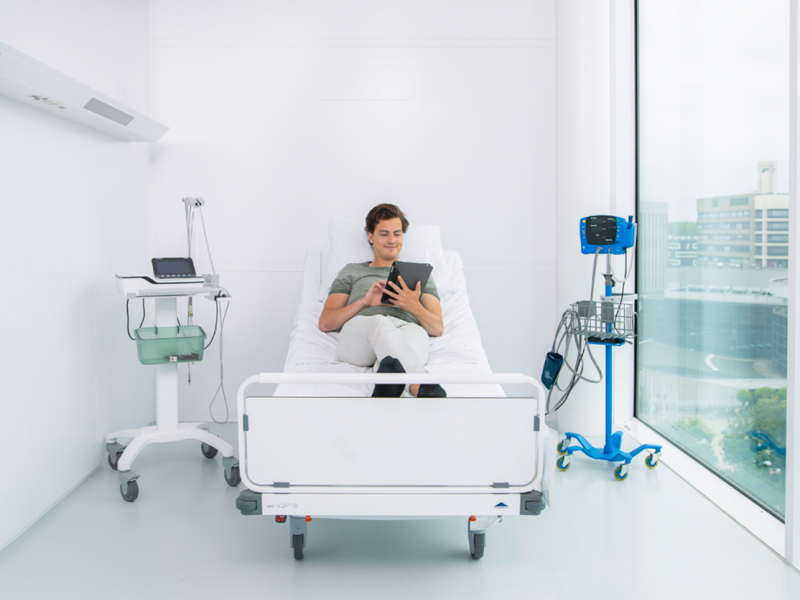
In 2024, the Internal Medicine group participated in two multicenter studies involving SLE patients, conducted at CHDR’s new clinical research unit located within the LUMC. All the participants were under the care of the LUMC Rheumatology department. ‘For the patients, it was a familiar environment, and if desired, a rheumatologist from the department could visit them during the study’, says Klarenbeek.
Healthy study participants
An even more challenging study focusing on the treatment of RA will start in 2025. Another biological compound aimed at eliminating B-cells will be administered to healthy study participants before it is given to patients. ‘Because B-cell depletion is quite drastic, it has so far only been done in patients', explains Klarenbeek. 'We believe it is safe to conduct the first exploratory studies in healthy study participants. This has the advantage that we can already gain a lot of knowledge and find the right dosage before we burden patients with the new drug.’
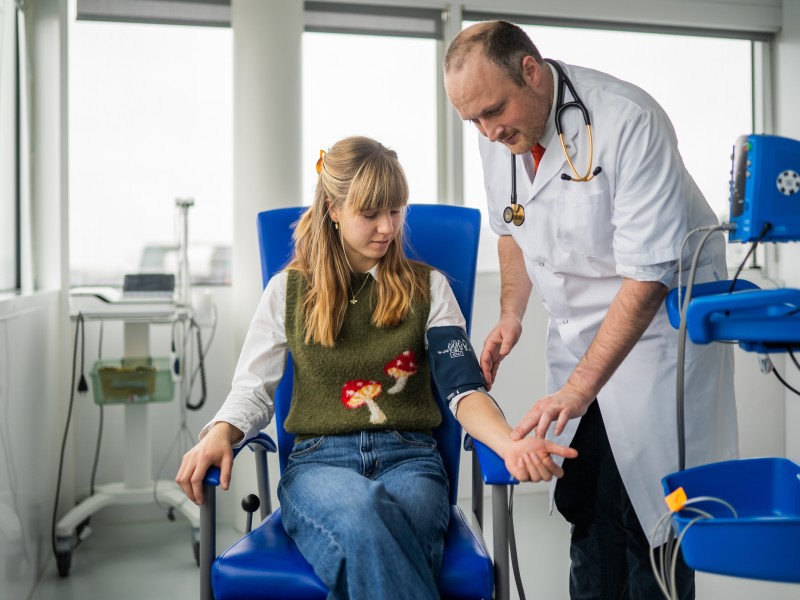
All participants will be carefully monitored after each administration. As soon as B-cell levels fall below a predefined threshold, the study will continue in patients with RA. Klarenbeek is confident about the safety aspects of this study. ‘We know from previous studies that immune function recovers quickly. A risk that we must monitor closely is the release of cytokines from the B cells. However, with the application of several risk mitigation steps, careful monitoring and timely intervention if necessary, we can ensure the well-being of our participants.'
She adds, 'It is truly fantastic to contribute to the development of treatments that may one day offer lasting remission, or even a cure, for autoimmune diseases like SLE and RA.’
Interested in learning more?
More articles from Developing drugs